
Research / Grants and projects / RECO2VER
OngoingRECO2VER
Utilizing industrial and biomass waste-derived catalysts for recycling CO2 into high-value energy resources
What the project is about
Spent lithium-ion batteries are piling up while CO2 emissions keep rising. RECO2VER answers both problems with one idea: turn waste into the catalysts that recycle CO2.
Conventional CO2 conversion relies on platinum-group and rare-earth metals, which are costly and damaging to mine. We replace them with metals recovered from spent batteries, placed on supports made from the battery's own graphite, from brewery sludge, and from agricultural biomass. We then study the catalysts while they work, and a life cycle assessment checks whether the whole route lowers environmental impact.
Spent batteries and waste
Spent batteries contain nickel, cobalt, manganese, copper, and graphite that can be recovered. Industrial sludge and biomass provide porous supports rich in silica and calcium oxide.
Waste-based catalysts
The recovered metals are placed on graphene oxide made from the battery's own graphite, or on the waste-derived supports.
CO2 into fuels and chemicals
Thermal catalysis and electrocatalysis turn CO2 into products such as formic acid, methane, methanol, and ethanol.
Objectives
- Test how well catalysts made from industrial and biomass waste convert CO2 into energy resources such as methane and synthetic fuels.
- Optimize how the catalysts are made, and understand the reaction mechanisms, to improve activity and selectivity.
- Run a life cycle assessment of the whole route, from waste recycling to the final product, as a benchmark for industry and government.
Project facts


Three-year roadmap
Synthesis and screening
Make catalysts from waste and find the best ones for CO2 conversion.
Scaling up production
Produce the best catalysts in larger batches and test their stability.
Scaling up the process
Run CO2 conversion in larger reactors and fine-tune the conditions.
Partners and team
Six institutions in four countries, each with its own role.
ThailandNANOTEC, Suranaree University of Technology, and Khon Kaen University
Leads the project, turns industrial and biomass waste into catalysts, and tests them in thermal catalysis and with synchrotron X-rays.
National Nanotechnology Center (NANOTEC)
- Dr. Pongtanawat Khemthong, project coordinator
- Dr. Bunyarat Rungtaweevoranit
- Dr. Sanchai Kuboon
- Dr. Kajornsak Faungnawakij
- Saran YoungJan
- Dr. Jakkapop Phanthasri
Suranaree University of Technology
- Prof. Jatuporn Wittayakun
- Assoc. Prof. Sanchai Prayoonpokarach
- Dr. Nattawut Osakoo
- Dr. Krittanun Deekamwong
Khon Kaen University
- Asst. Prof. Sirinuch Loiha
- Asst. Prof. Rattabal Khunphonoi
IndonesiaNational Research and Innovation Agency (BRIN)
Recycles spent batteries into catalysts, tests them in electrocatalysis, characterizes them, and runs the life cycle assessment.
- Dr. Angga Hermawan, lead in Indonesia
- Dr. Ni Luh Wulan Septiani
- Dr. Andri Hardiansyah
- Dr. Sri Rahayu
- Dr. Eng. Octia Floweri
- Dr. Riesca Ayu Kusuma Wardhani
- Dr. Muqoyyanah
- Dr. Yosephin Dewiani Rahmayanti
- Dr. Agusta Samodra Putra
- Ayu Erliza, S.T., M.T.
- Hismiaty Bahua, S.T., M.T.

AustriaTU Wien
Tests the catalysts under controlled conditions and studies how they work.
- Assoc. Prof. Karin Föttinger
GermanyLeibniz Institute for Catalysis (LIKAT)
Tests the catalysts and shares know-how on catalysis and characterization.
- Dr. Ali M. Abdel-Mageed
Results from Year 1
What the consortium found between 2025 and 2026. Results not yet published are described in general terms.
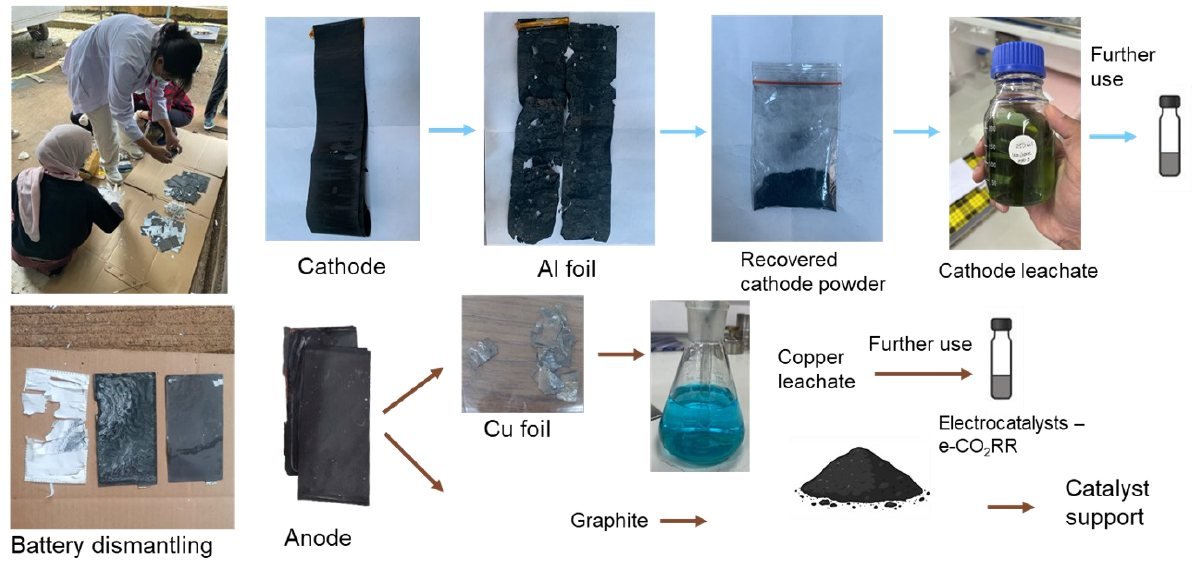
Metals recovered from spent cathodes
Spent cells were discharged, taken apart, and separated into cathode powder, copper foil, aluminium foil, and graphite. Leaching with nitric acid recovered 90 to 98% of the nickel, manganese, cobalt, and lithium, more than sulfuric acid did. The recovered graphite becomes the catalyst support in the next steps.
Catalysts made from battery leachate
The leached metals were turned into layered hydroxides, layered oxides, and nickel-cobalt-manganese-iron oxides. A high-entropy layered oxide from this work drives overall water splitting and HMF oxidation, and is published in Materials Horizons.
Graphene oxide from spent anodes
Waste graphite was oxidised into graphene oxide by three variants of the Tour method. All three resemble commercial graphene oxide, and Raman spectroscopy suggests fewer defects. Bismuth electrodes built on this waste-based graphene approach the active area of the same electrodes on commercial graphene.
Bismuth for CO2 to formic acid
Bismuth nanoclusters electrodeposited from a deep eutectic solvent convert CO2 into formic acid, a liquid hydrogen carrier. This work is published in Fuel.
CO2 to methane by thermal catalysis
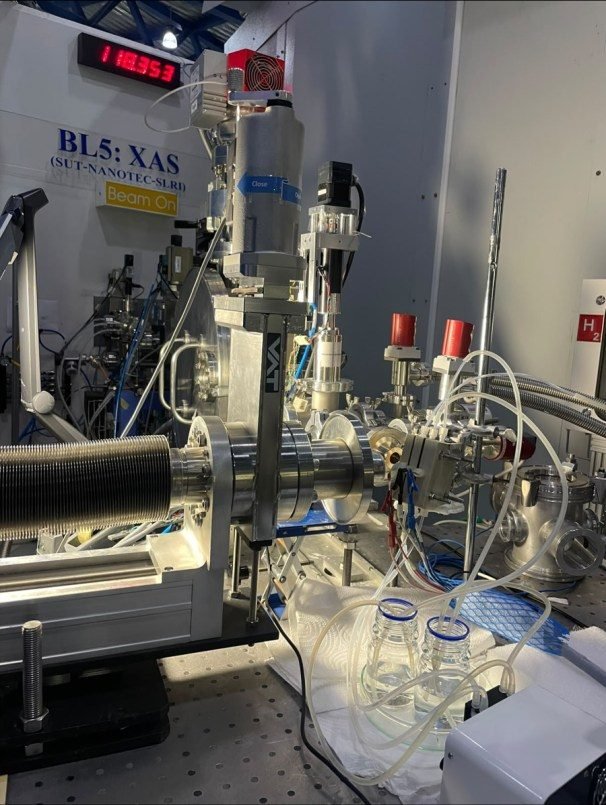
Partners in Thailand are testing the conversion of CO2 and hydrogen into methane over catalysts on waste-derived supports, and are following the catalysts while they work with X-ray absorption at the Synchrotron Light Research Institute.
Life cycle assessment
A first assessment of formic acid made from CO2 suggests that making the catalyst causes most of the environmental impact, more than battery leaching or recycling. It also indicates that the electricity source matters: water use falls well below the conventional process, while the climate impact depends on renewable power.
Tools built for the project
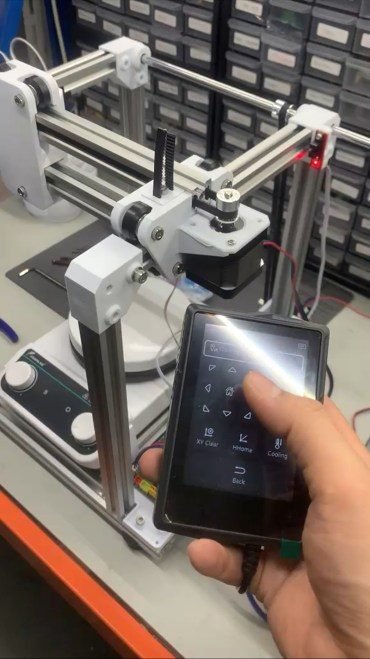
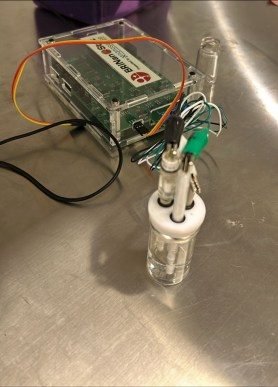
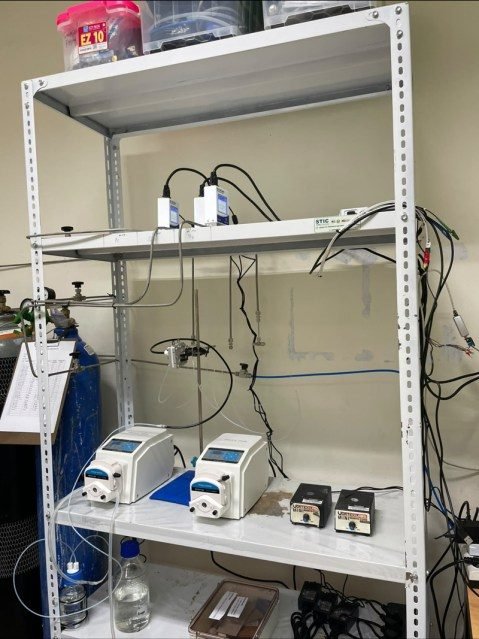
The team built two laboratory prototypes and an in-house test rig for CO2 conversion.
Papers from this project
High-entropy layered oxide electrocatalyst derived from spent battery cathodes for overall water splitting and 2,5 hydroxymethylfurfural (HMF) oxidation. Materials Horizons 13(11), 5417-5429, 2026
Electrodeposition of bismuth nanoclusters using deep eutectic solvent for electroreduction of carbon dioxide to formic acid. Fuel 428, 140299, 2027
Activities
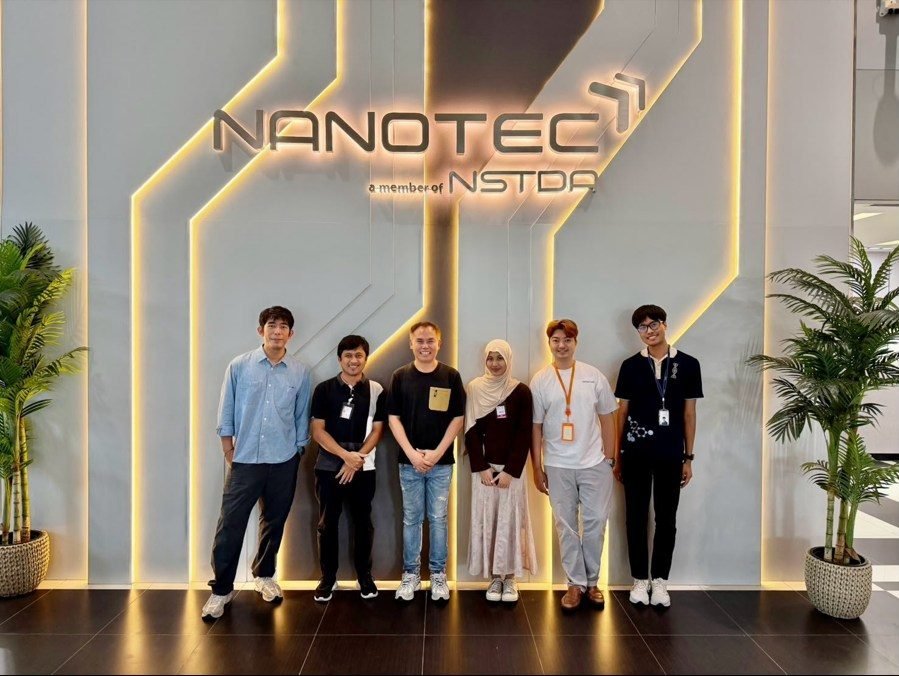
- Visit to the NANOTEC laboratories in Thailand, 8 to 9 September.
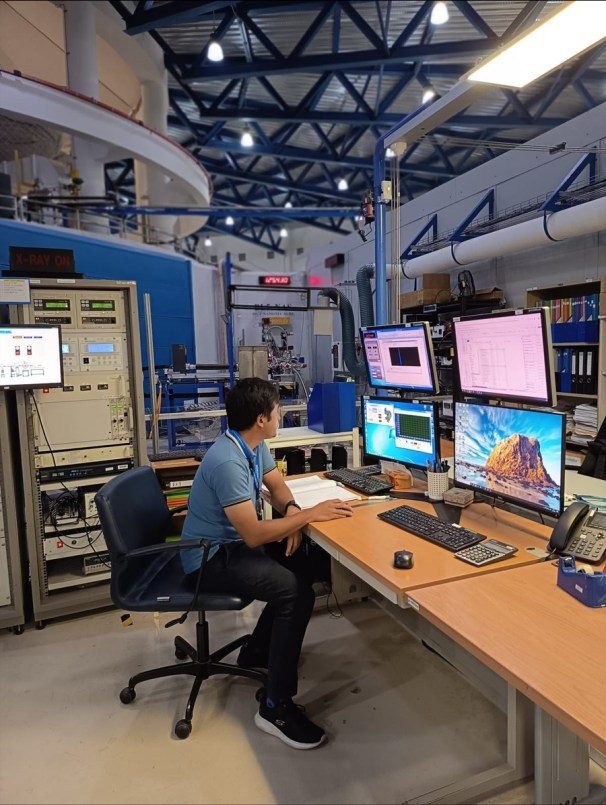
- Synchrotron beamtime at the Synchrotron Light Research Institute (SLRI), Thailand, 1 to 7 September. Team members measured catalyst samples with synchrotron X-rays, working with NANOTEC researchers.
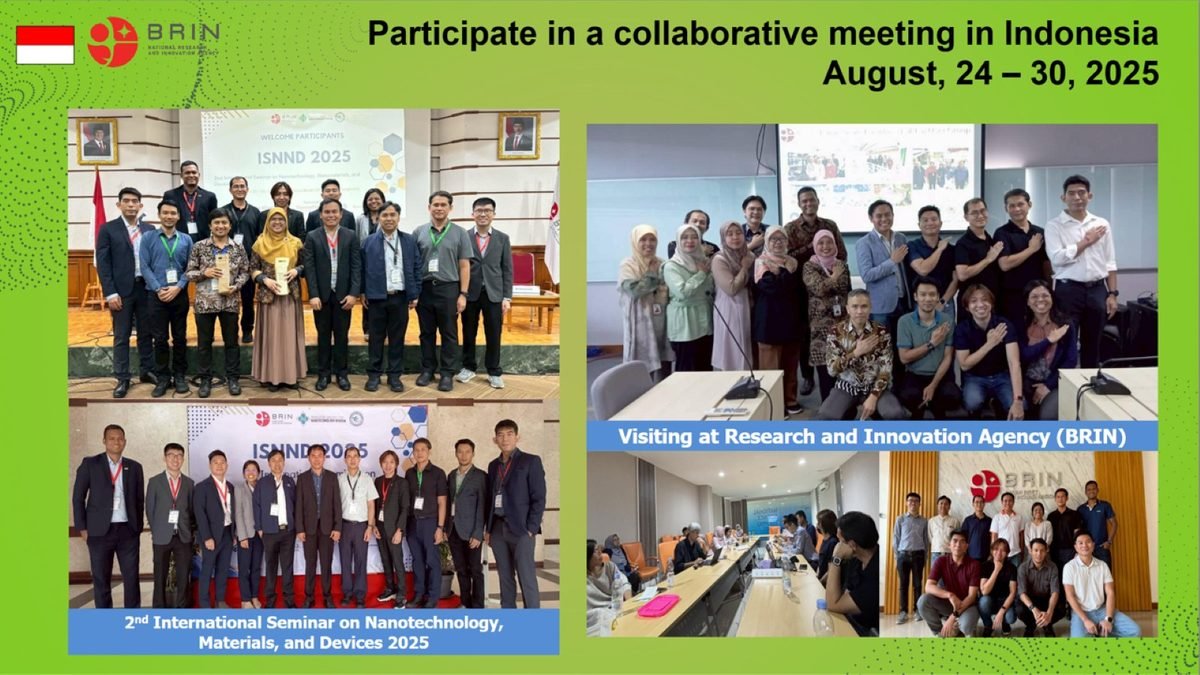
- Partners met in Indonesia for a week of seminars and laboratory visits at BRIN, 24 to 30 August, alongside the 2nd International Seminar on Nanotechnology, Materials, and Devices.
- Workshops, a conference, site visits, and regular online meetings of the consortium.
Interested in this project?
We welcome questions, joint work, and students who want to build on it.